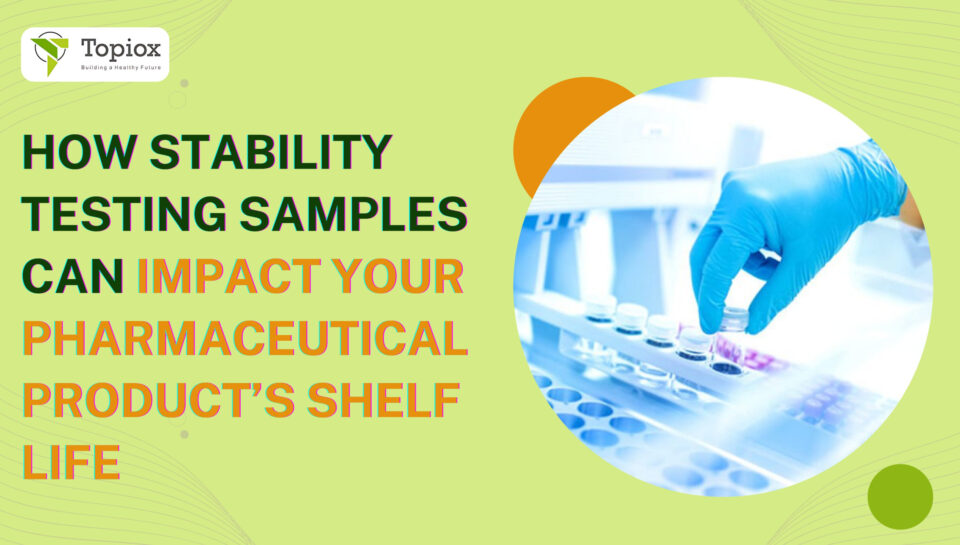
In the highly regulated pharmaceutical industry, stability testing is a cornerstone of product development, ensuring that drugs remain safe, effective, and reliable throughout their shelf life. Stability testing samples play a crucial role in evaluating the long-term integrity of pharmaceutical products, helping manufacturers make critical decisions regarding formulation, packaging, and storage conditions.
At Topiox Research, we specialize in comprehensive stability testing services designed to provide scientifically robust data, ensuring your pharmaceutical product meets global regulatory standards and performs consistently from production to patient use. Stability testing samples give us vital information that helps pharmaceutical companies ensure their products meet both efficacy and safety standards, providing a clear path to regulatory approval and market readiness.
What is Stability Testing?
Stability testing refers to a series of experiments designed to evaluate how a pharmaceutical product performs over time under specific environmental conditions. This testing helps determine how the product holds up under various factors such as temperature, humidity, and light exposure. Stability testing is critical for establishing expiration dates, ensuring product quality, and determining appropriate storage conditions.
Types of Stability Testing:
- Long-Term Stability Testing – Conducted at recommended storage conditions for a period of up to 12 months or longer to estimate the shelf life of the product.
- Accelerated Stability Testing – Tests the product under higher-than-normal temperature and humidity conditions to speed up the degradation process, providing data on how the product may behave over a shortened period.
- Intermediate Stability Testing – Performed at intermediate conditions, typically at moderate temperature and humidity, to gather data for products showing instability under accelerated conditions.
- Photostability Testing – Evaluates the effect of light exposure on product stability, particularly for light-sensitive formulations like ophthalmic products and cosmetic formulations.
- In-Use Stability – Assesses how the product remains stable during storage and use once it is opened or exposed to various external factors like air and handling.
The Impact of Stability Testing on Shelf Life Determination

1. Predicting Product Shelf Life
Stability testing samples provide pharmaceutical companies with invaluable data about how a product behaves over time. By measuring factors such as API degradation, impurity formation, and physical changes like color, viscosity, or odor, stability tests help predict how long a product can maintain its efficacy and safety.
Without stability testing, there is no reliable way to determine the expiration date for a pharmaceutical product. Stability testing is crucial in ensuring that active pharmaceutical ingredients (APIs) retain their potency and safety until the product is consumed.
For example, in solid dosage forms like tablets, stability testing ensures that the disintegration time and dissolution rates of the tablets remain consistent, ensuring they deliver the correct dose to the patient over time.
2. Guiding Formulation and Packaging Decisions
Stability testing provides vital feedback on how different excipients, formulation techniques, and packaging materials interact with the active ingredient. For instance, if a product degrades in humid conditions, stability testing can inform the use of moisture-resistant packaging or the addition of desiccants to improve the shelf life.
Similarly, if light exposure causes degradation, photostability testing helps identify the need for opaque packaging or light-resistant containers. Without stability testing, these decisions could result in product failure or compromise therapeutic efficacy.
3. Ensuring Regulatory Compliance
Regulatory agencies such as the FDA, EMA, and ICH require stability data as part of the New Drug Application (NDA), Abbreviated New Drug Application (ANDA), and Drug Master File (DMF) submissions. Stability data assures regulatory authorities that the product meets the quality standards necessary for market approval.
Compliance with Good Manufacturing Practices (GMP) and stability testing requirements is crucial for global market access. Failure to produce reliable stability data can lead to delays in product approval, product recalls, or regulatory fines.
4. Supporting Ongoing Quality Control and Product Monitoring
Once a pharmaceutical product is on the market, continuous stability testing is essential to monitor the product’s quality and safety over time. Stability testing samples help track the product’s performance as it ages in various environmental conditions including storage and shipping to ensure that it maintains its integrity during the post-market phase.
For products such as biologics, sterile products, and complex formulations, even small changes in stability can have significant impacts on patient safety and product effectiveness. Post-market stability studies can also provide insights into any required changes in the manufacturing process or storage conditions.
Stability Testing at Topiox Research
At Topiox Research, we offer state-of-the-art stability testing services designed to support pharmaceutical manufacturers in ensuring the quality and efficacy of their products. Our scientifically rigorous stability studies help you meet FDA, EMA, and ICH guidelines, ensuring your product’s shelf life is accurately determined, supported by valid and reliable data.
Our Stability Testing Services Include:
- Long-Term Stability Studies – Testing under recommended storage conditions for up to 12 months or more to estimate the shelf life.
- Accelerated Stability Studies – Providing quicker predictions of shelf life based on stress testing under high temperature and humidity conditions.
- Temperature and Humidity Cycling – Examining how environmental fluctuations impact drug performance and stability.
- Photostability Testing – Assessing the impact of light exposure on drug stability for sensitive formulations.
- Packaging Compatibility Studies – Evaluating how packaging materials interact with the product to maintain its stability.
Why Choose Topiox Research for Stability Testing?
- Expertise: With years of experience in pharmaceutical testing, our team of scientists and regulatory experts provides high-quality, reliable stability data.
- Advanced Technology: We utilize cutting-edge instrumentation like HPLC, LC-MS, and UV spectroscopy for precise testing of drug stability.
- Global Compliance: Our stability studies comply with FDA, EMA, and ICH guidelines, ensuring audit-ready reports for regulatory submissions.
- Comprehensive Reporting: We provide detailed reports with statistical analysis, offering clear insights into your product’s stability profile.
Global Reach: Serving clients in India and internationally, we provide timely, efficient stability testing solutions for pharmaceutical products worldwide.
Conclusion
Stability testing is essential for ensuring the quality, safety, and efficacy of pharmaceutical products throughout their lifecycle. By conducting thorough and scientifically rigorous stability studies, manufacturers can accurately predict the shelf life of their products, make informed decisions about formulation, packaging, and storage, and meet regulatory standards for market approval.
At Topiox Research, we provide comprehensive stability testing services that help you maintain the highest standards of pharmaceutical quality control and ensure that your products remain safe and effective for consumers worldwide.