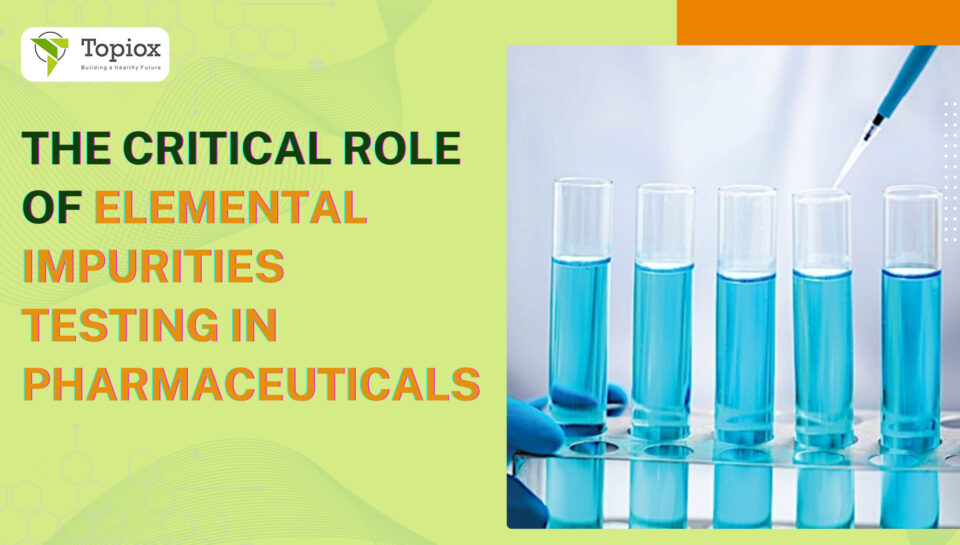
In the pharmaceutical industry, ensuring that drugs are safe, effective, and free from harmful contaminants is paramount. One of the key safety concerns in drug development and manufacturing is the presence of elemental impurities, which can be harmful to patients if present in excessive amounts. These impurities can enter a drug through raw materials, excipients, or during the manufacturing process. Elemental impurities testing is therefore essential for identifying and controlling these contaminants, ensuring the safety of pharmaceutical products, and ensuring compliance with regulatory guidelines.
At Topiox Research, we specialise in providing comprehensive elemental impurities analysis to ensure that pharmaceutical products meet stringent safety standards set by global regulatory bodies such as the FDA, EMA, and ICH. In this blog, we will delve into what elemental impurities testing involves, its significance in pharmaceutical development, and how it protects both patient health and regulatory compliance.
What Are Elemental Impurities?
Elemental impurities refer to trace amounts of metals or metalloids that may be present in drug formulations. These elements can be toxic at certain levels and may cause adverse effects such as organ toxicity, carcinogenicity, and neurological damage. Some common elemental impurities include:
- Lead
- Arsenic
- Cadmium
- Mercury
- Chromium
- Nickel

These impurities can originate from raw materials, packaging components, equipment, or during various stages of drug production. Therefore, it is crucial to conduct elemental impurities testing to ensure that they do not exceed the established acceptable limits set by regulatory authorities.
The Importance of Elemental Impurities Testing in Pharmaceutical Development
1. Protecting Patient Health
The primary goal of elemental impurities testing is to protect patient health by ensuring that drugs do not contain harmful levels of toxic metals. Even trace amounts of heavy metals such as lead or arsenic can have detrimental effects on patient safety, particularly in long-term use. Regular testing ensures that these impurities are identified and eliminated from the manufacturing process, thereby safeguarding public health.
2. Ensuring Regulatory Compliance
Regulatory agencies like the FDA, EMA, and ICH have established strict guidelines for acceptable levels of elemental impurities in pharmaceutical products. For example, the ICH Q3D guideline provides detailed specifications for elemental impurity limits in drug products, based on their potential toxicity. Adhering to these guidelines is not just a regulatory requirement but a fundamental aspect of maintaining market authorisation for pharmaceutical products.
Topiox Research conducts thorough elemental impurities analysis using cutting-edge technologies to ensure that your drug products meet or exceed these stringent requirements, helping your company maintain compliance and avoid costly delays or product recalls.
3. Ensuring Drug Quality and Efficacy
Elemental impurities can also negatively impact the stability and efficacy of pharmaceutical formulations. Impurities such as nickel or chromium can interact with the active pharmaceutical ingredients (APIs), altering the drug’s chemical composition and reducing its effectiveness. By conducting elemental impurities testing, manufacturers can ensure that their products maintain quality and consistency, leading to better therapeutic outcomes for patients.
4. Preventing Product Recalls and Reputational Damage
If elemental impurities are found in a drug product after it reaches the market, it can result in costly product recalls and severe damage to the company’s reputation. Regular testing and early identification of impurities during the formulation development phase reduce the risk of such events. Preventing these issues through comprehensive testing helps companies maintain trust with healthcare providers and consumers.
How Elemental Impurities Testing Works
1. Sample Collection and Preparation
In elemental impurities testing, samples of the pharmaceutical product, whether it’s the drug formulation, raw materials, or packaging component, are collected. These samples are then processed and prepared to ensure that all potential impurities are extracted effectively for analysis.
2. Analytical Techniques Used for Testing
Several advanced analytical techniques are used to detect and quantify elemental impurities in drug products:
- Inductively Coupled Plasma Mass Spectrometry (ICP-MS):
This is one of the most commonly used methods due to its high sensitivity and ability to detect even trace levels of heavy metals. - Graphite Furnace Atomic Absorption Spectroscopy (GFAAS):
Used for measuring metals in pharmaceutical products with high accuracy. - Inductively Coupled Plasma Optical Emission Spectroscopy (ICP-OES):
Often used for the analysis of bulk drug products and raw materials.
Topiox Research employs these and other advanced technologies to ensure that elemental impurities are detected at the lowest possible levels, providing accurate, reliable data to support regulatory submissions.
3. Interpretation of Results
Once the testing is complete, the results are analysed to determine whether the impurity levels are within acceptable limits. If the levels exceed the regulatory thresholds, formulation adjustments or process modifications are made to eliminate the excess impurities. This process ensures that the drug formulation is safe, effective, and compliant.
Conclusion
Elemental impurities testing is a critical component of the pharmaceutical development process, ensuring that drugs are safe, effective, and free from toxic metal contamination. By adhering to regulatory guidelines and employing advanced analytical methods, pharmaceutical manufacturers can protect patient health, maintain product quality, and prevent regulatory issues.
At Topiox Research, we offer elemental impurities testing services that comply with FDA, EMA, and ICH guidelines, ensuring that pharmaceutical products meet the highest standards of safety and efficacy. Our state-of-the-art testing and regulatory compliance services help manufacturers navigate the complexities of drug development, ultimately safeguarding public health.
FAQs