Introduction: Understanding Nitrosamine Impurities in Pharmaceuticals
Nitrosamine impurities have become a critical concern in the pharmaceutical industry due to their potential to cause serious health risks. As carcinogenic contaminants, these impurities can compromise the safety and efficacy of pharmaceutical products, especially active pharmaceutical ingredients (APIs) and finished drug formulations. The emergence of these impurities in several medications, particularly angiotensin II receptor blockers (ARBs), has raised alarms and prompted regulatory authorities to impose stringent testing protocols.
In this blog, we will explore the impact of nitrosamine impurities in pharmaceuticals, the methods of nitrosamine testing, and how testing labs ensure compliance with safety regulations to protect public health.
Nitrosamine impurities have become a critical concern in the pharmaceutical industry due to their potential to cause serious health risks. As carcinogenic contaminants, these impurities can compromise the safety, efficacy, and quality of pharmaceutical products, particularly active pharmaceutical ingredients (APIs) and finished drug formulations. The detection of these impurities in various medications, most notably in angiotensin II receptor blockers (ARBs) has prompted regulatory authorities such as the FDA, EMA, and ICH to impose stringent testing and control protocols to safeguard public health.
At Topiox Research, we understand the growing importance of nitrosamine testing in maintaining pharmaceutical integrity and regulatory compliance. Our specialised analytical laboratories provide comprehensive nitrosamine impurities testing services using advanced methodologies and state-of-the-art instrumentation to ensure that every product meets global safety standards.
What Are Nitrosamine Impurities?
Nitrosamines are a class of chemical compounds known for their carcinogenic properties. They typically form under certain manufacturing conditions involving nitrosating agents such as nitrites and amines, which can occur during the synthesis of drugs, API production, or even during storage.
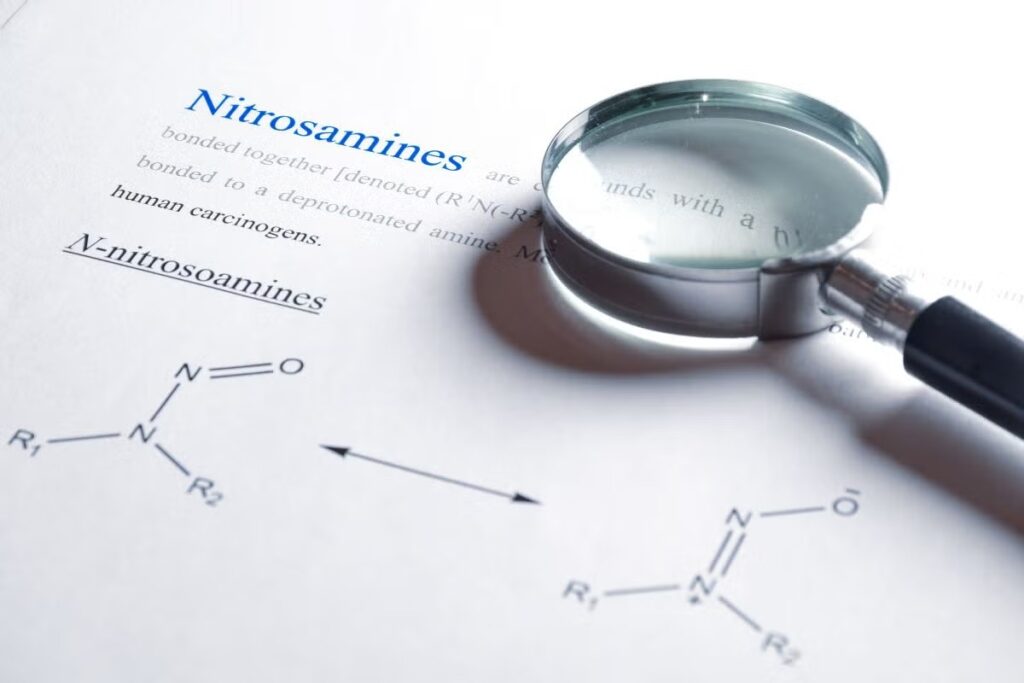
Common examples of nitrosamine impurities found in pharmaceuticals include:
- N-nitrosodimethylamine (NDMA)
- N-nitrosodiethylamine (NDEA)
- N-nitrosopiperazine (NPIP)
Due to their toxic effects on human health, nitrosamine impurities must be carefully monitored and controlled to ensure the safety of pharmaceutical products.
The Impact of Nitrosamine Impurities on Pharmaceutical Safety
1. Carcinogenic Risk to Patients
The primary concern with nitrosamine impurities in pharmaceuticals is their carcinogenic potential. Studies have linked exposure to nitrosamines to an increased risk of cancer in both humans and animals. As a result, even trace amounts of nitrosamines in drug formulations pose a serious safety threat.
2. Regulatory Compliance Challenges
Regulatory agencies such as the US FDA, EMA, and WHO have introduced strict guidelines for nitrosamine testing to prevent contaminated pharmaceuticals from reaching the market. The FDA’s guidance document on nitrosamine impurities has set limits for acceptable daily intake (ADI) for several common nitrosamine compounds.
For example, the acceptable daily intake (ADI) for NDMA is set at 96 ng/day, and NDEA has a much stricter limit of 26.5 ng/day. Pharmaceutical companies must adhere to these guidelines and provide evidence through nitrosamine testing that their products are free from unsafe levels of these contaminants.
3. Pharmaceutical Recalls and Market Impact
The presence of nitrosamine impurities has resulted in multiple drug recalls, severely affecting the reputation of pharmaceutical manufacturers and impacting market availability. For instance, valsartan, a commonly used blood pressure medication, was recalled due to nitrosamine contamination, highlighting the significant public health and financial consequences of such impurities.
The Importance of Nitrosamine Impurities Testing

1. Ensuring Pharmaceutical Safety
The nitrosamine testing process plays a crucial role in maintaining drug safety. By detecting and quantifying nitrosamine impurities at trace levels, testing ensures that the active pharmaceutical ingredients (APIs) used in generic and branded drugs meet regulatory standards and are safe for consumer use.
2. Compliance with Regulatory Standards
Nitrosamine testing labs use state-of-the-art analytical techniques to identify and quantify impurities, ensuring compliance with FDA, EMA, and ICH guidelines. These regulatory bodies have set specific protocols for manufacturers to follow, including detailed testing of raw materials, API manufacturing processes, and final drug products.
3. Preventing Contamination During Drug Manufacturing
Monitoring the manufacturing environment is critical to minimising the formation of nitrosamine impurities. This includes ensuring that raw materials, solvents, and manufacturing conditions (e.g., temperature and pH levels) do not facilitate the formation of these harmful compounds. Effective nitrosamine testing helps identify the root causes of contamination early, enabling companies to mitigate risks before they reach consumers.
Methods of Nitrosamine Impurities Testing
1. High-Performance Liquid Chromatography (HPLC)
One of the most widely used methods for nitrosamine testing is HPLC, which allows for the separation and quantification of different nitrosamines in pharmaceutical formulations. HPLC is highly sensitive, making it an ideal choice for detecting trace-level impurities in drug products.
2. Gas Chromatography-Mass Spectrometry (GC-MS)
GC-MS is another advanced technique employed by nitrosamine testing labs for detecting volatile nitrosamines like NDMA and NDEA. This method combines the separating power of gas chromatography with the sensitivity of mass spectrometry, making it suitable for complex matrices.
3. Liquid Chromatography-Mass Spectrometry (LC-MS/MS)
LC-MS/MS is frequently used for nitrosamine impurities testing due to its ability to handle complex samples and provide highly accurate results. This technique is used for quantification and confirmation of nitrosamine contaminants, offering high sensitivity and specificity.
4. Ion Chromatography
Ion chromatography is another effective method, particularly for detecting certain nitrosamines. It is increasingly being used for routine analysis in pharmaceutical testing.
Nitrosamine Impurities Testing Labs: Ensuring Accurate and Reliable Results
Nitrosamine testing labs are essential in ensuring that pharmaceutical products meet regulatory requirements and are safe for patients. These labs employ highly trained analysts, state-of-the-art equipment, and validated testing methods to detect nitrosamine impurities with precision.

Key aspects of nitrosamine testing in specialised labs include:
- Accurate detection of nitrosamine impurities at trace levels
- Validation of test results to meet regulatory standards
- Implementation of preventive measures during the drug manufacturing process to reduce the formation of nitrosamines
Conclusion: Safeguarding Public Health with Nitrosamine Impurities Testing
Nitrosamine impurities are a significant concern in pharmaceutical safety due to their carcinogenic properties. The proper nitrosamine testing in pharmaceutical products is critical to ensuring that drugs are safe, compliant with regulatory standards, and suitable for public consumption. By employing state-of-the-art testing methods and adhering to global regulations, nitrosamine testing labs play a key role in protecting patient health and maintaining the integrity of the pharmaceutical industry.