
Topical formulations are easy to apply, but hard to evaluate.
A semisolid may meet Q1/Q2 sameness.
A gel may demonstrate batch-to-batch consistency.
A release profile may look ideal on paper.
But one critical question remains:
Does the drug permeate through the skin barrier in a way that matches the reference product?
That question is not cosmetic, it is clinical, regulatory, and commercial.
In Vitro Permeation Testing (IVPT) answers it.
Used correctly, IVPT is more than a compliance tool. It is a mechanistic window into dermal absorption, skin barrier function, and bioequivalence behavior.
At Topiox Research, we treat IVPT not as an isolated assay, but as part of an integrated topical development strategy designed to reduce clinical risk, align with regulatory expectations, and accelerate approval for semisolid and transdermal products.
What Is IVPT and Why It Matters
In Vitro Permeation Testing (IVPT) quantifies the amount of drug that diffuses across human or animal skin under controlled conditions.
Unlike IVRT, which measures drug release from the dosage form, IVPT captures:
- Skin barrier interaction
- Rate-limiting permeation steps
- Cumulative dermal absorption
- Formulation-to-skin dynamics
IVPT is now a foundational method in:
- Topical bioequivalence testing
- Semisolid ANDA programs
- In vitro dermal absorption modeling
- Formulation optimization and risk mitigation
Regulators including the FDA and EMA recognize IVPT as part of a totality of evidence strategy, and in many cases, as a pathway to waive clinical endpoint trials.
How IVPT Studies Are Conducted
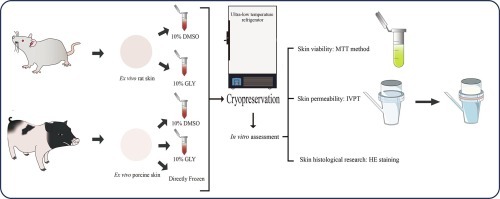
IVPT studies use Franz diffusion cell testing systems. These systems mimic the drug transport environment across the stratum corneum.
Key Components:
- Donor compartment: formulation applied at clinically relevant dose
- Receptor compartment: maintains sink conditions (high solubility)
- Biological membrane: human cadaver skin or validated porcine skin
- Controlled temperature: typically 32 ± 1°C
Samples from the receptor medium are collected at defined intervals and analyzed via HPLC or other validated methods.
Primary IVPT Output Parameters
- Cumulative amount permeated (µg/cm²)
- Steady-state flux (µg/cm²/h)
- Lag time (h)
- Permeability coefficient (Kp)
- Area under the permeation curve (AUC)
These metrics define the skin permeation performance of a topical formulation and form the foundation of bioequivalence comparisons.
The Science Behind Skin Permeation: Conceptual Transport Framework
To fully leverage IVPT, one must understand dermal transport pathways.
Here is the flow:
Formulation Microstructure
↓
Drug Thermodynamic Activity
↓
Release from Vehicle (IVRT)
↓
Partition into Stratum Corneum
↓
Diffusion Across Skin Layers (IVPT)
↓
Dermal or Systemic Target Delivery
Each step can be a rate-limiting barrier. IVPT identifies where formulation behavior influences absorption outcomes.
Statistical Equivalence in IVPT Studies
Permeation comparison is not just visual, it is statistical.
Regulatory Methodology
- Use of log-transformed data for flux and cumulative absorption
- Application of 90% confidence intervals for test/reference ratios
- Equivalence is established when CI falls within predefined margins (commonly 80–125%)
- For some parameters, scaled average bioequivalence approaches may apply
IVPT statistical analysis is required by the FDA and EMA to support bioequivalence claims.
At Topiox Research, all IVPT data packages include pre-specified statistical modeling aligned with FDA product-specific guidance.
Donor Variability Management in IVPT
Human skin is biologically variable.
Controlling for inter-donor and intra-donor differences is critical.
Best Practices:
- Minimum of 4–6 donors (FDA-recommended)
- Multiple replicates per donor (typically 2–3)
- Randomized cell-to-donor allocation
- Stratification or crossover design where applicable
- Integrity testing (TEWL or electrical resistance) to confirm barrier function
Robust study design ensures that observed differences reflect formulation behavior, not biological noise.
How IVPT Enhances Scientific Understanding
IVPT transforms dermal drug delivery from guesswork into mechanistic insight.
1. Identifies Rate-Limiting Steps
IVPT reveals whether permeation is controlled by:
- Vehicle release
- Stratum corneum partitioning
- Intradermal diffusion
2. Detects Microstructure Sensitivity
Small changes in:
- Viscosity
- Droplet size
- Crystallinity
- Phase distribution
Can shift permeation profiles. IVPT catches what Q1/Q2 sameness may miss.
3. Quantifies Penetration Enhancer Impact
Whether chemical (oleic acid), physical (microneedles), or formulation-driven, IVPT measures enhancer performance via:
- Increased flux
- Shortened lag time
- Altered absorption kinetics
Regulatory Role of IVPT in Topical Bioequivalence
IVPT is now embedded in global regulatory expectations:
- FDA PSGs frequently require IVPT data in semisolid ANDAs
- EMA Draft Guideline recognizes IVPT as a valid surrogate for clinical efficacy
- SUPAC-SS references in vitro methods for post-approval changes
When IVPT Can Waive Clinical Trials
If a test product demonstrates:
- Q1/Q2 sameness
- Q3 similarity
- Equivalent IVRT release
- Equivalent IVPT permeation
Then regulators may waive clinical endpoint studies, saving years and millions.
IVPT in the Development Lifecycle
Topical IVPT studies should be integrated across development stages:
| Phase | IVPT Role |
| Early | Evaluate enhancers, optimize vehicle |
| Mid | Compare release–permeation correlation |
| Late | Confirm bioequivalence vs reference product |
| Post-approval | Support SUPAC-SS or formulation scale changes |
This reduces late-stage surprises and ensures data readiness for regulatory submission.
Why Topiox Research for IVPT Studies
At Topiox Research, IVPT is not an isolated test, it’s part of a validated, regulator-aligned dermal development platform.
Our capabilities include:
- Human cadaver skin-based IVPT with validated sourcing and quality control
- Franz diffusion cell systems with temperature and agitation controls
- ICH Q2(R2)-compliant method validation
- Custom receptor medium design for solubility and sink maintenance
- Statistical equivalence modeling per FDA and EMA requirements
- Integrated Q3 + IVRT + IVPT strategy tailored for semisolid ANDAs
We help sponsors align scientific insight with regulatory precision, reducing study repetition, accelerating approval timelines, and de-risking development decisions.
Conclusion
IVPT studies are more than tests, they are tools for understanding.
When properly designed, IVPT provides:
- Mechanistic insight into skin barrier transport
- Quantitative comparison of test and reference permeation
- Regulatory-grade data to justify bioequivalence
- A path to reduce or eliminate clinical trial requirements
In a regulatory climate increasingly focused on in vitro dermal absorption, IVPT sits at the core of modern topical drug development. At Topiox Research, we embed IVPT into a comprehensive platform that includes IVRT, Q3 microstructure analysis, and strategic regulatory design, enabling our partners to move confidently from prototype to approval.